Master the Art of Islamic Calligraphy: Hüsn-i Hat Icazet Programme
£200.00
Description
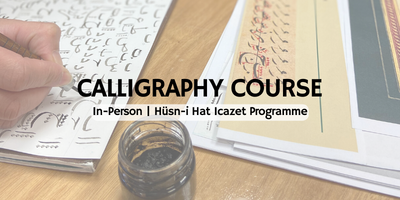
Calligraphy Course | In-Person | Hüsn-i Hat Icazet Programme
Advance Your Calligraphy Skills and Work Towards Your Icazet (Diploma of Permission)
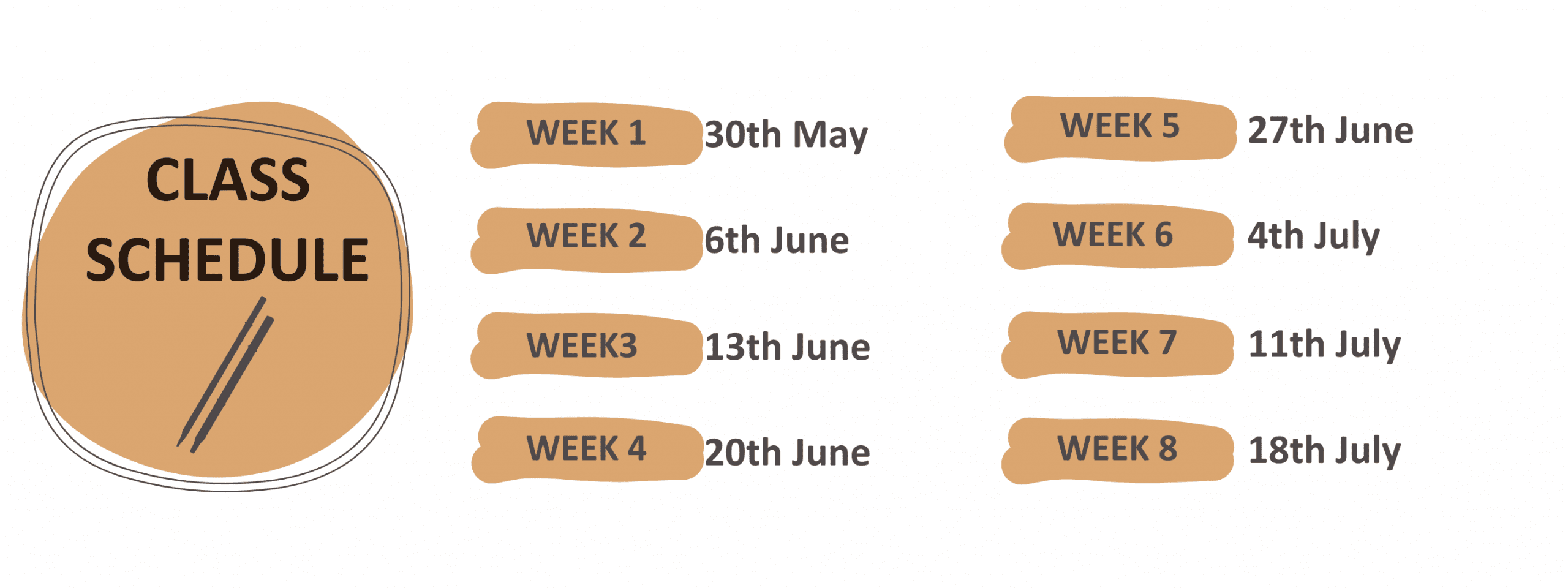
Date: Saturdays, 30th May – 18th July 2026
Time: 10 am – 12 pm & 12 pm – 2 pm
Duration: 8 weeks
Fee: £200 (excludes materials)
Class Size: Min. 4 – Max.12 Students
Instructor: Gulnaz Fatima Mahboob
Location: 10 Maple Street W1T 5HA (Nearest tube stations: Warren Street and Goodge Street)Instructor: Gulnaz Fatima Mahboob
Extra Session: A 1 hour session will take place on 18th July 2026 from 2 pm – 3 pm to reconvene with other students and reflect on the course as a whole.
The course will be split into two groups. Students will be allocated a time slot by the instructor once registration has been completed.
Classes will be held on the following dates:
Entry Requirements
- Completion of the Introduction to Calligraphy: Nesih /Naskh course is a prerequisite to joining Icazet Programme.
- Entry to Icazet Programme will be determined by a tutor assessment at the end of the Introductory course. Students who take a year or more off will be required to undergo an assessment by the tutor before re-joining.
- Students must attend the weekly lessons.
- You must be 18+ to attend the course.
- Students are required to complete the form to register successfully.
Course Overview
The Icazet (diploma) is a coveted qualification that validates the learning of Hüsn-i-hat. The Icazet grants permission to sign work, teach and authorise Icazets. The student who receives the Icazet is known as a Hattat (Master Calligrapher). Hüsn-i-hat cannot be taught without the Icazet.
The traditional instruction and education of calligraphy which was passed on from Master to student was carried on for hundreds of years and is preserved until the present. The programme aims to enable students to get an Icazet in line with the Ottoman tradition. Students who successfully complete the Icazet programme will be connected to the calligraphers Silsila or genealogy tree.
The Ottoman genealogy link started in the 15th Century with the pioneering Master Shaykh Hamdullah and continued for 500 years. Bridging the link between the Ottoman period and 20th Century was achieved by the renowned Hattat Hamid Aytaç. His student Hattat Hasan Çelebi is one of the most celebrated and leading Masters of this era, successfully carrying the tradition into the 20th Century across Turkey and world-wide. He holds the position of Reis ul Hattatin (Chief Master). The Ijazah is an important qualification for Hüsn-i-hat because it preserves the tradition of learning and must be earned through trust, hard work and commitment.
In the traditional method of learning husnihat the exact length of time to be awarded an Ijazah cannot be determined. The training lasts a number of years. It is a personalised learning system and the progression of masqh (practice sheet) is dependent on the student’s commitment to daily practice and skill. It is believed an Ijazah can be obtained between 4 to 7 years and a student is expected to commit from 4 to 8 hours of learning daily to meet this target. It is possible for a skilled student to complete the programme in less time.
The Icazet programme allows students to begin working towards their Islamic Calligraphy / Hüsn-i-hat icazet / ijazah (diploma of permission). The icazet is a coveted qualification that validates the learning of Hüsn-i-hat. The icazet grants permission to sign work, teach and authorise icazet. The student who receives the icazet is known as a Hattat (Master Calligrapher). Hüsn-i-hat cannot be taught without the icazet. It is an important qualification for Hüsn-i-hat as it preserves the tradition; it is a living tradition that dates back 10 Centuries and connects you to the Ottoman genealogy tree. The genealogy link began in the 15th Century with Şeyh Hamdullah through to Hamid Aytaç Hoca, and currently is spread by one of Hamid Hoca’s leading Master Calligrapher Hasan Çelebi Hoca. Gulnaz Fatima Mahboob will be teaching the course and her icazet was given by Hasan Çelebi Hoca.
Course Structure
Students are expected to write the meşk in a single line each week to be corrected by the tutor. The student must either repeat the exercise or proceed to the next exercise. The student must follow the teacher’s instruction and only proceed to the next exercise if approved. If the Icazet programme is not completed to a satisfactory standard, the course must be repeated before proceeding to the next level.
Methods of Teaching
The course will be taught according to the traditional training and the educational model used in Istanbul, which has remained largely unchanged for hundreds of years. The Nesih script, which was primarily chosen to write the Qur’an, will be practiced and the meşk / masqhs (practice sheets) by the 18th Century Ottoman Master Şevki Effendi will be used as examples.
Assessment & Certification
There will be an evaluation at the end of the course.
Students will receive a hand-out at the beginning of the course about the terms used in this art and feedback throughout the duration of the course to track improvement.
A digital certificate of attendance or completion will be provided to students upon request at the end of the term.
Required Equipment & Materials
Students are required to buy their materials for the Icazet programme. The materials required are reed/kamış pen, ink/mürekkep, cutting board/makta, raw silk/lika, 30ml glass jar/hokka and kuşe/silk-coated paper.
Students seeking additional materials can either purchase them independently or from the Institute (if in stock)
Course Policies and Guidelines
Icazet (Authorization):
In the traditional method of learning Hüsn-i Hat, the exact length of time required to be awarded an icazet (authorization) cannot be predetermined. Training usually takes a number of years and follows a personalised learning system, where the progression of meşk depends on the student’s commitment to daily practice and the development of skill.
Completing this course will not automatically result in being issued an icazet. The icazet can only be granted by Gulnaz Mahboob, and not by the Yunus Emre Institute.
Focus of the course: This is not an Arabic language or grammar course. The focus is on learning the form and aesthetic principles of the letters. It is the study of a traditional Islamic art: Hüsn-i Hat.
Language: The course is primarily taught in English, though some terminology may be in Turkish. Your instructor will clarify any terms or concepts as needed during the class.
Materials & equipment: Some classes may require specific tools (e.g. reed pen, ink, or paper). Please check the course requirements beforehand to ensure you have everything you need to participate fully.
Safety & comfort: Please avoid loose clothing (large cuffs, ties, etc.) during practical sessions.
Personal belongings: Students are responsible for their own items. The Institute cannot accept liability for any loss or damage.
Minimum numbers: Courses require a minimum number of participants. If this is not met, the Institute may cancel one day before the start date, with full refunds issued.
Withdrawals & refunds:
Withdrawals are accepted up until the start date with no charge.
After the course has begun, cancellations will incur a 25% administration fee.
No refunds will be issued after the completion of the second week of classes.
Rescheduling: Classes may be subject to cancellation or rescheduling due to unforeseen circumstances. We will inform you in advance and, if possible, provide alternative arrangements. Students are advised to keep two weeks free from the course end date.
Certificates: Certificates of attendance or completion may be provided upon request.
Photography & filming: Sessions may be photographed or filmed for archival and promotional purposes. Please inform your instructor if you prefer not to appear.
Communication: Any changes (e.g. time or date adjustments) will be communicated by email.
Feedback: Suggestions and concerns are always welcome. You may share them directly with your instructor, the administrative staff, or email us at londra@yee.org.tr.
By enrolling in the course, students acknowledge their understanding and acceptance of the above terms and conditions.